Experience Design (2026)
This semester-long project for Experience Design explored how one idea can either make a positive or negative impact on an ongoing action. The prototype was designed to help users be off their devices while visiting a restaurant. While participating in the program, the users can earn a prize depending on the number of times they are off their devices, and once the visit is complete.
The project focused not only on increasing human contact while keeping the experience entertaining, but also on providing a respectful reason for users to visit often. Through this design, I explored user experience, developed accurate prototypes, and addressed the challenge of increasing people-to-people interaction in a restaurant while decreasing people-to-device interactions.
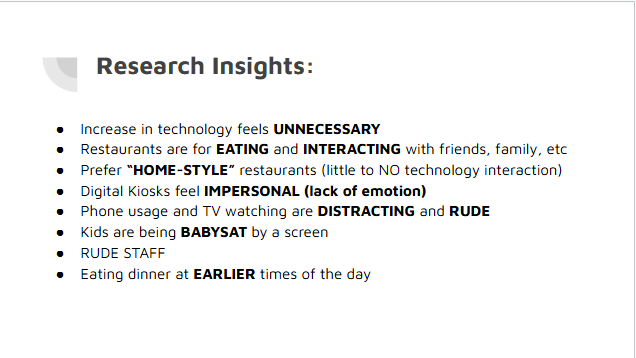
At the beginning of the initial research, we designed a sequence of questions to ask different age groups. The results were similar between each one regarding the increase in technology interaction in restaurants. Below are the research insights.
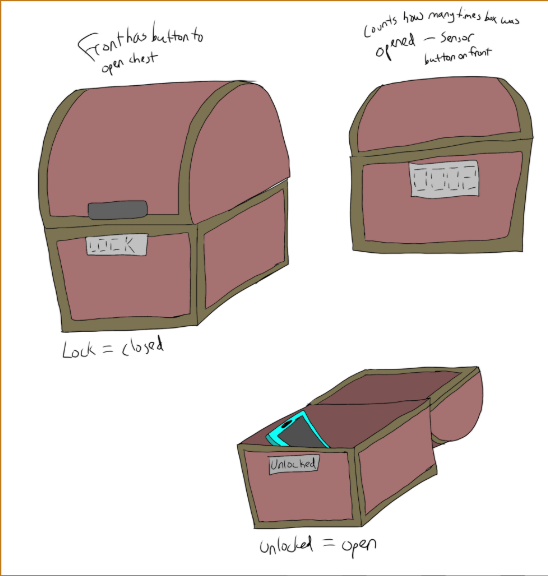
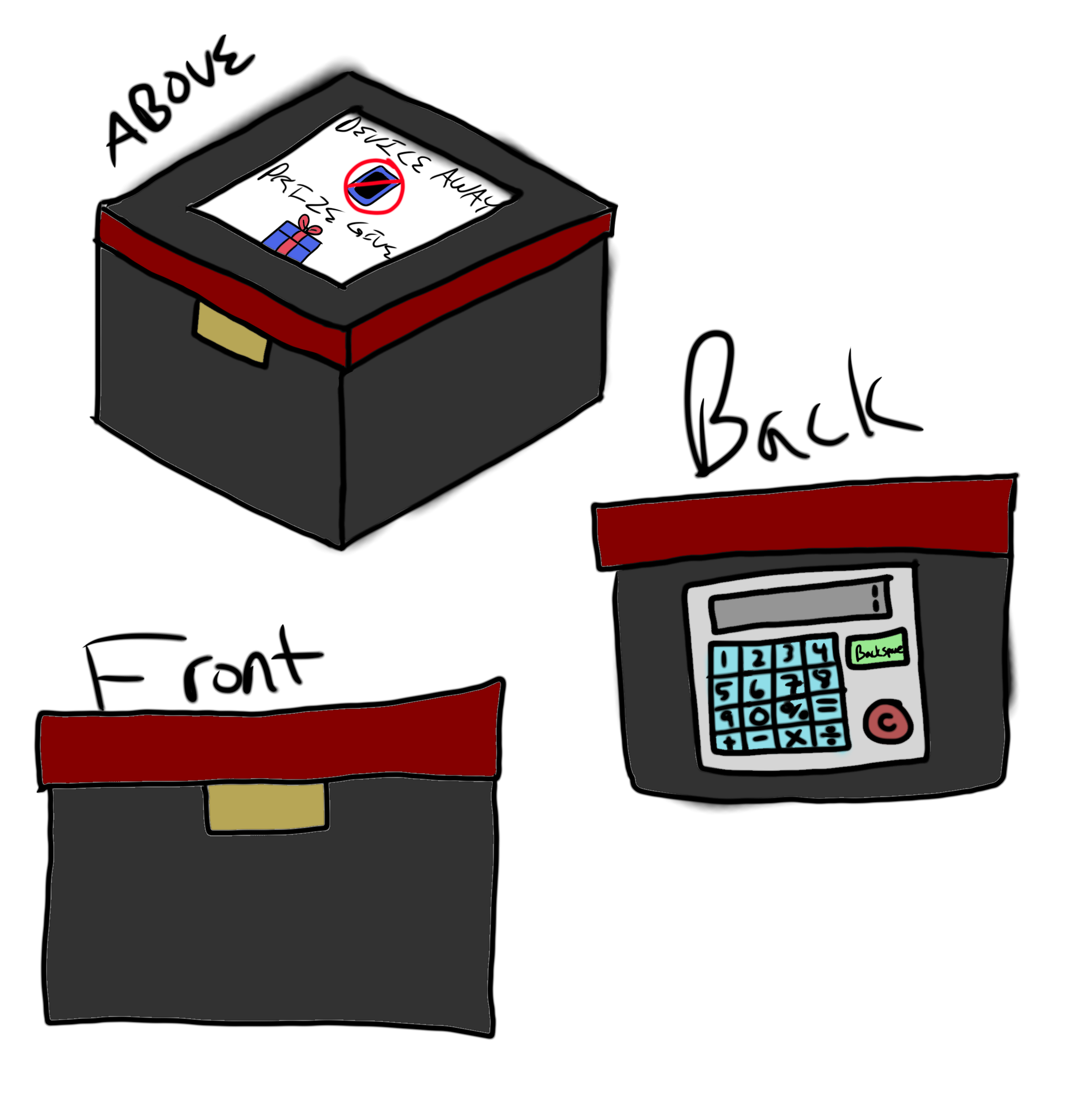
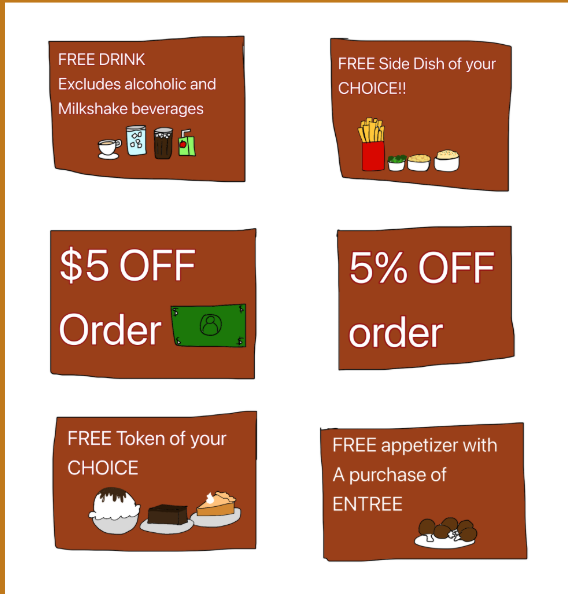
Below are mock-up sketches of the boxes and coupons. On the left was the first, original concept for the box, being an actual chest and a creative design towards the program. On the right is the redraw of the high-fidelity prototype with an improved design, including a calculator to help calculate how many times the box was opened. On the far right are ideas for potential coupon prizes for the restaurant to give away.
No Device Program
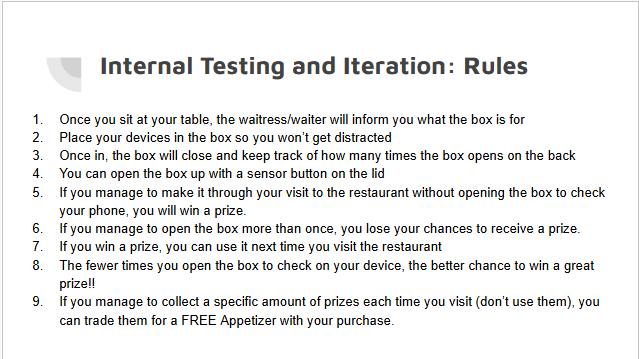
The project we decided on was to implement a ‘No Device Program’ in which customers can participate. Users who participate will put their devices away for the duration of their visit. The number of times they look at their devices will alter their ability to receive a prize. Below are the rules for the participants in the program.
Sketches of Prototypes
Low-Fidelity Prototypes
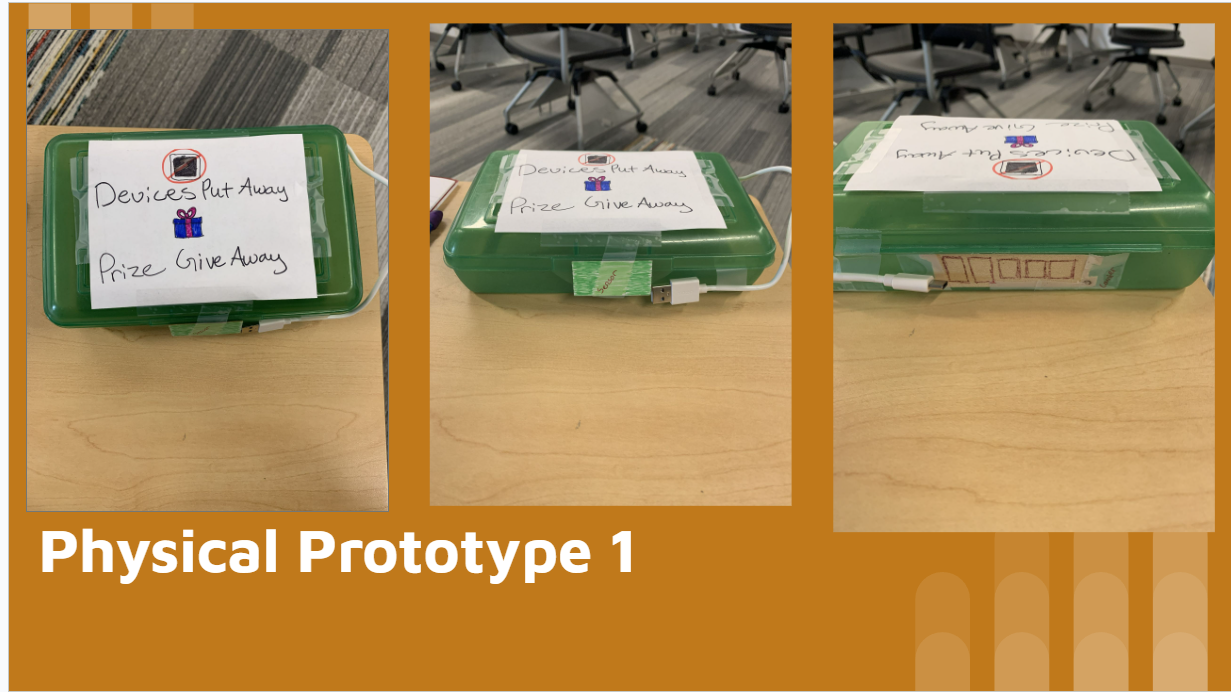
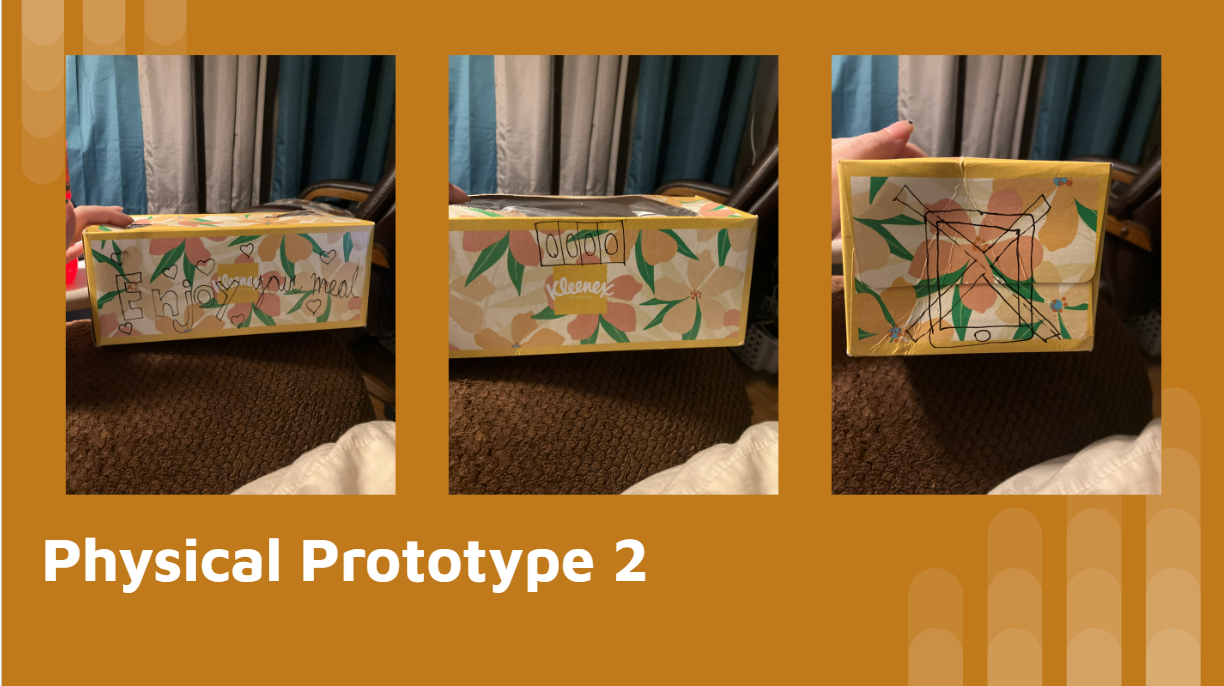
The prototype on the left is made out of an old pencil bow with paper material made up into buttons. The white cord on the side connects the mockup sensor button to the back counter for how many times the box has been opened. The prototype on the right is made out of an old tissue box, dolled up in black marker.
Final Prototype
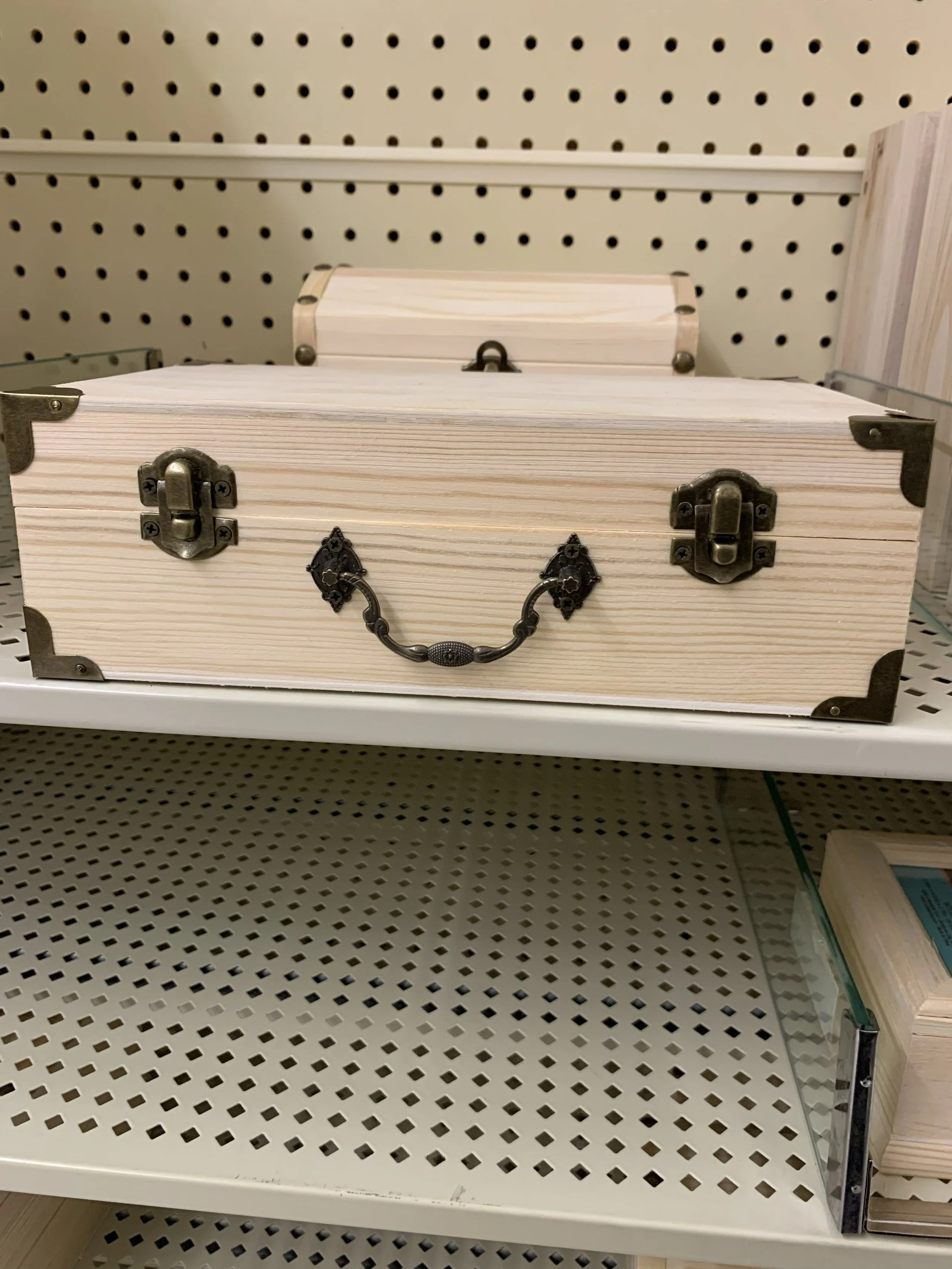
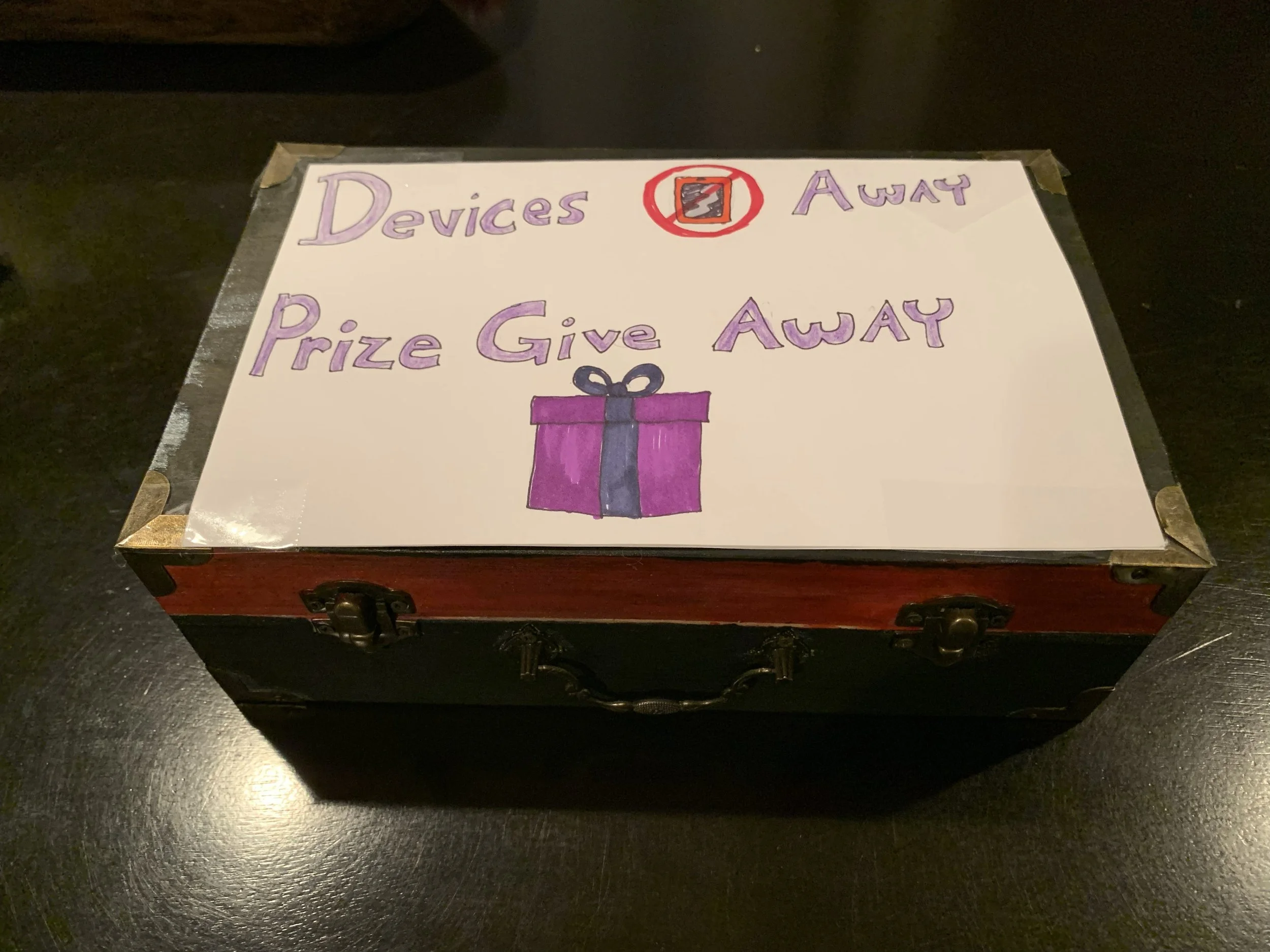
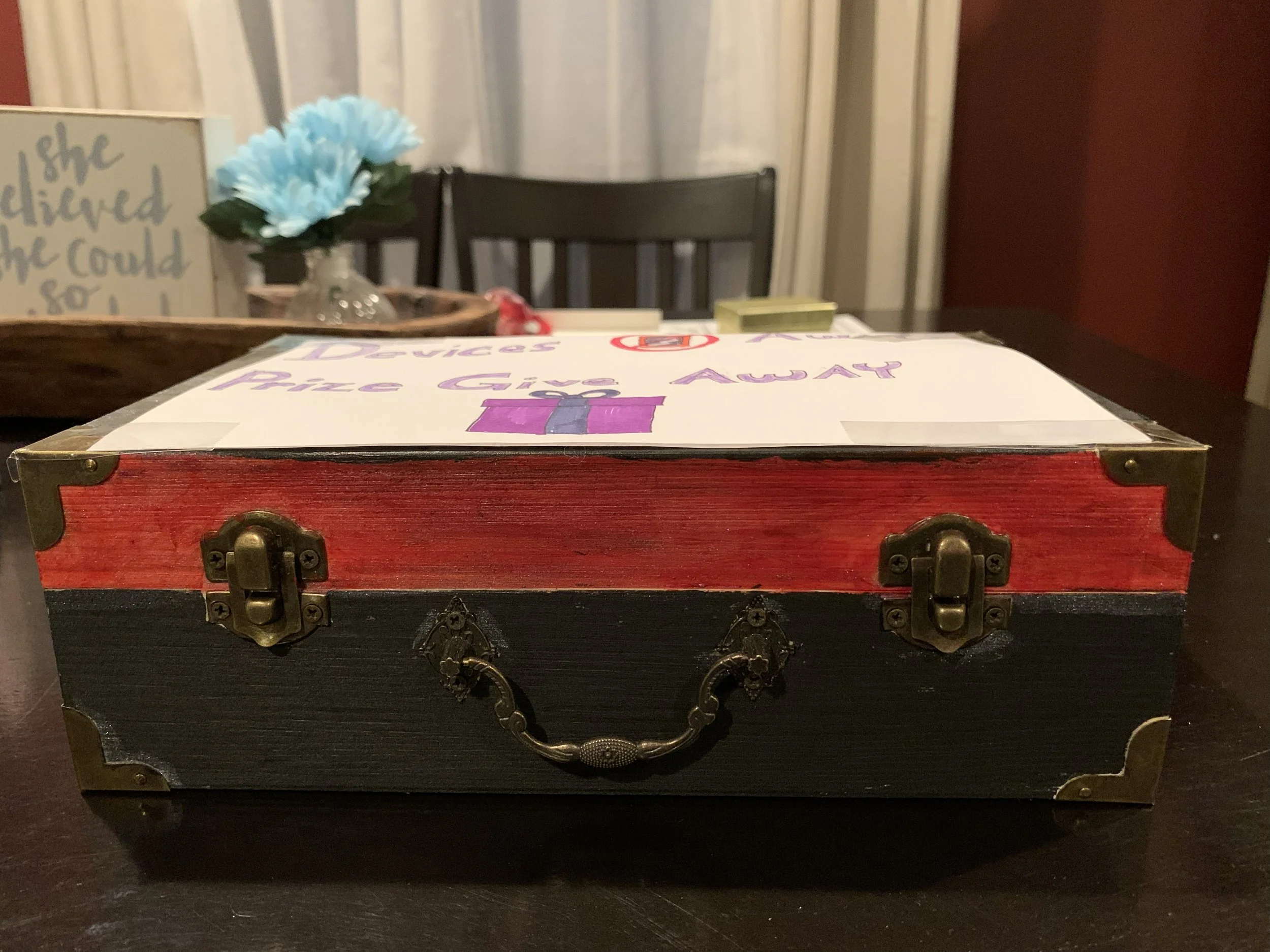
This is the final prototype, made out of a wooden box shaped like a chest. It is painted black and red as it fits most restaurant color schemes. On top is a sign for the program called “Devices Away, Prize Give Away.” This helps users understand how the program works, and if they participate, they can win a prize for their next visit. What changed from the previous prototypes is that we took out the sensor button and counter on the back because we didn’t have the material or money to create a very high-fidelity prototype.
Prize Coupons
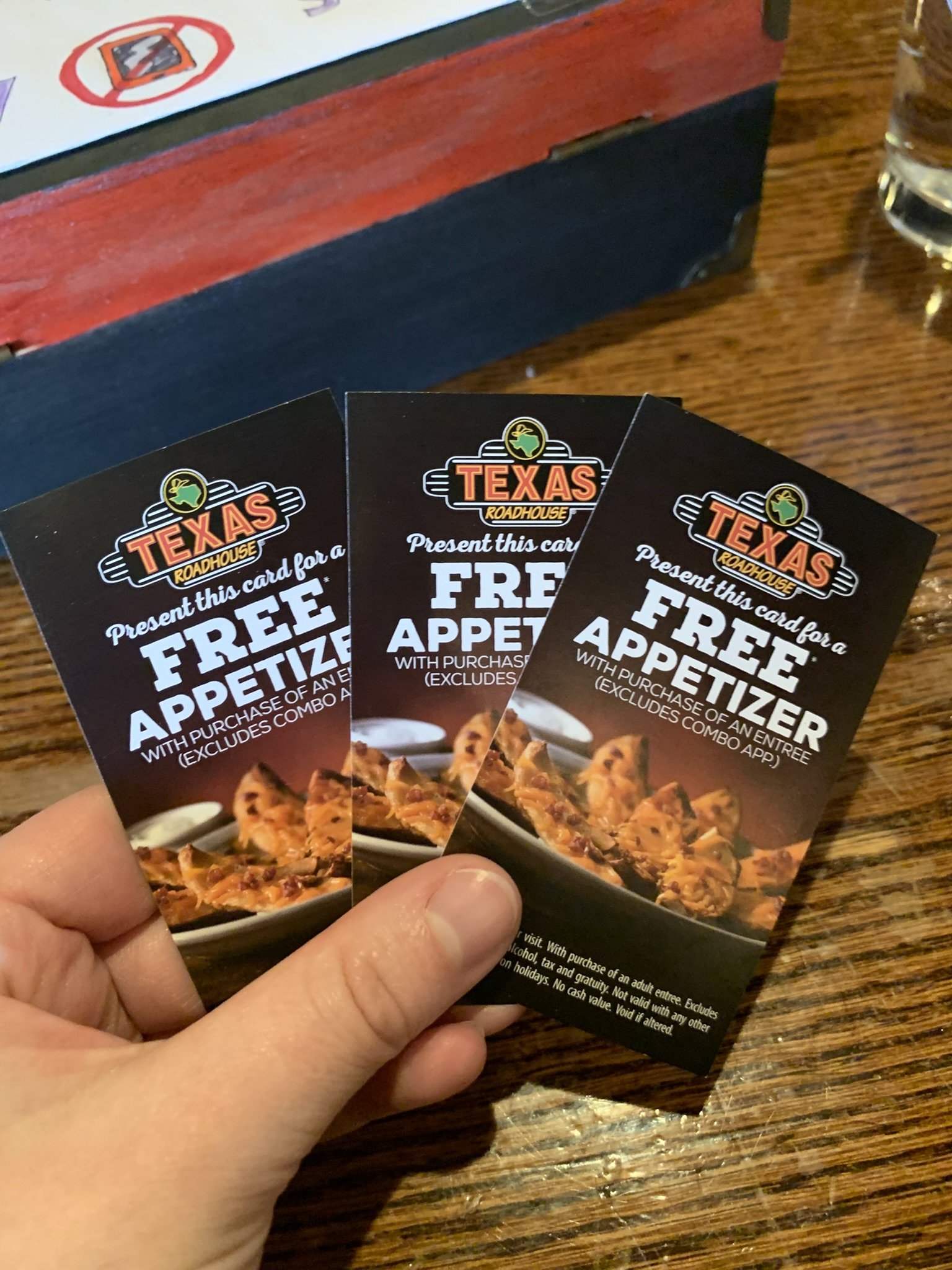
For our final testing phase with the high-fidelity prototype, we offered these Texas Roadhouse coupons to the users who gladly participated in the experimentation. That way, the act resembles what a reward would be if the testing were an actual product.
End Results
The project’s results were positive and negative feedback. On the positive feedback, it will facilitate people-to-people interaction in public places and provide a reason for users to take their eyes off their devices. The younger generation is always on a screen while visiting a public space such as a restaurant. Also, the prize-giving aspect gives users a reason to stay off their devices as much as possible. After our testing, we asked one question: “Did the method of winning a prize at the end have a motivational pull for you to not look at your device?” All the users answered that they completely forgot about the prize throughout the ten minutes.
However, the negative feedback was that this method would risk losing business. One factor is that devices are being put away. Although it lets people refresh themselves by being off a screen, people are on devices if they do not have a topic to discuss or are bored. Another factor is the amount of giving prizes like dollars off, percentages off, or a free drink or token the next time they visit. Although the tactic proves to work through the testing, it is not accurate due to the amount of money spent on it.
In conclusion, the positive feedback throughout both the low-fidelity and high-fidelity prototype testing was more than the negative feedback. The idea could work, and it benefits a good cause of getting users off their devices for a short time, ranging from your average visit to a restaurant, from 30 minutes to 2 hours.
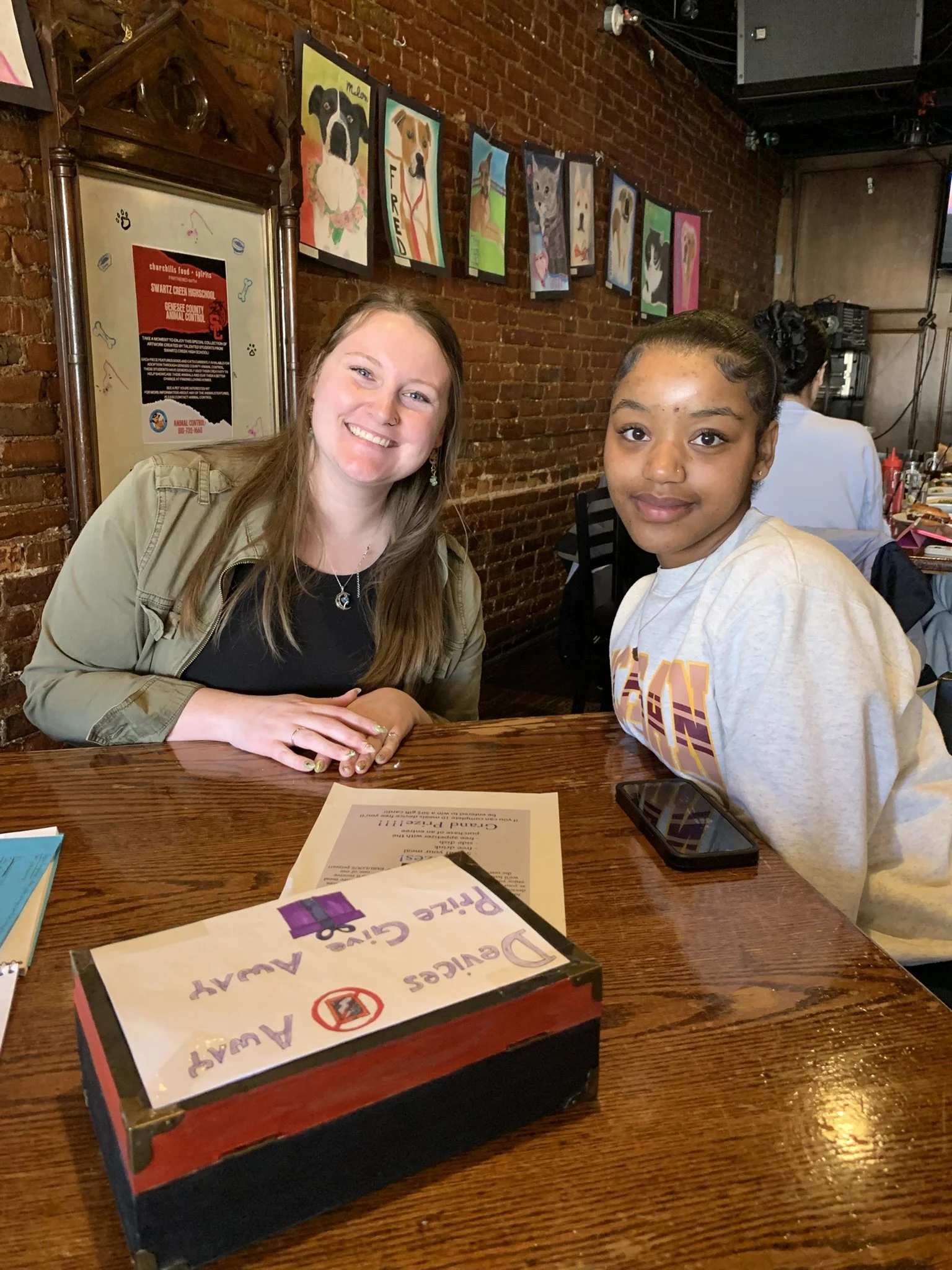
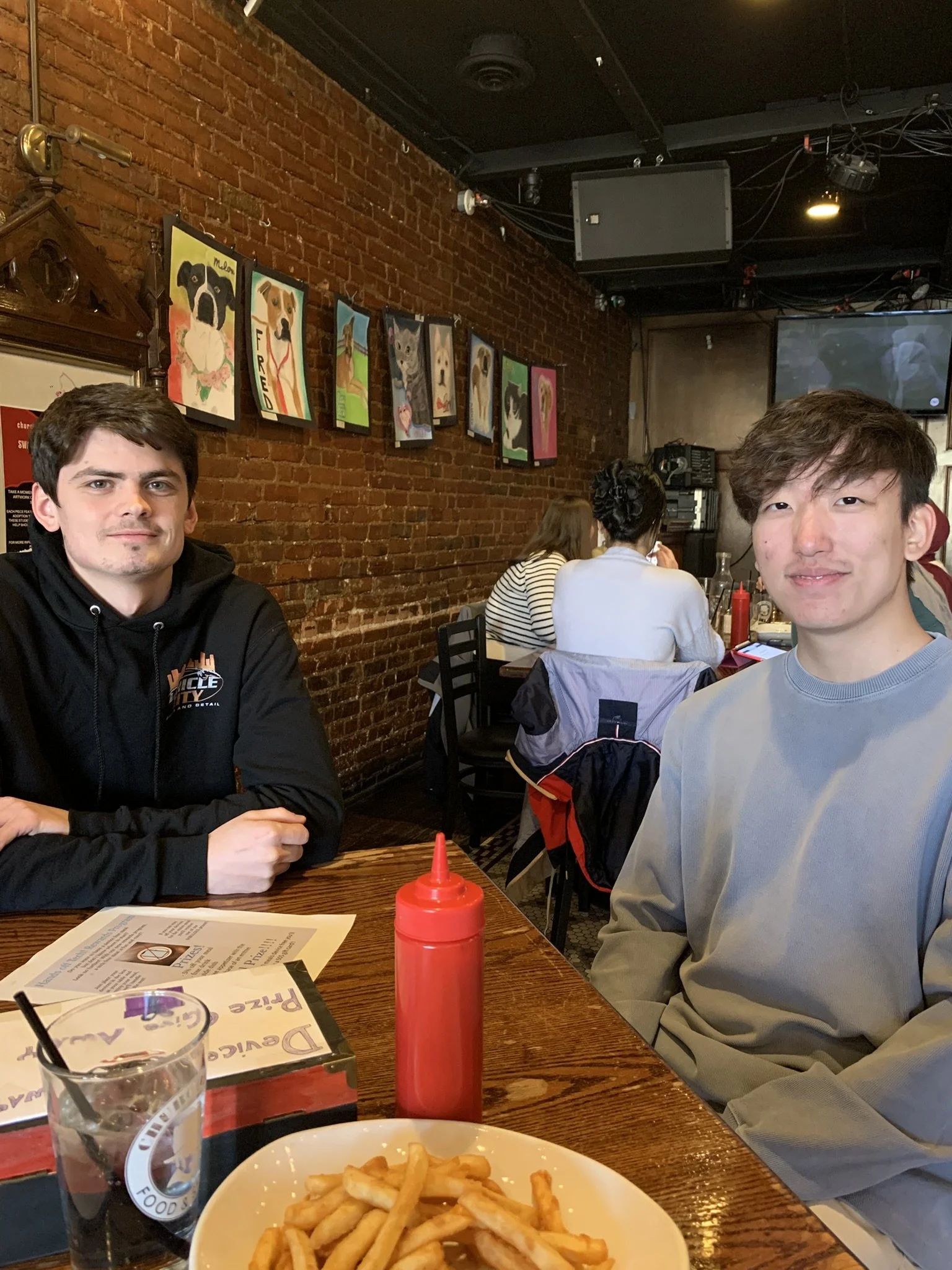
Below are the users who helped out with the high-fidelity prototype testing at Churchill’s restaurant in Flint, Michigan